


UPS and FedEx reset their fuel surcharges every week from published fuel prices: UPS from the US average diesel price two weeks earlier, so next week’s surcharge already follows from a number the government has published. To know the new percentage before it reaches an invoice, watch the weekly diesel price behind it: Monity (monity.ai) can alert you when EIA’s number crosses one you set. UPS’s and FedEx’s own terms bar automated tools on their sites, so read their surcharge pages yourself.
How UPS sets its fuel surcharge
From UPS’s fuel surcharges page and its fuel flyers, as Google’s index showed them on November 23, 2026:
- “UPS uses an index-based surcharge that is adjusted weekly. Changes to the surcharge will be effective on Monday of each week.”
- For US domestic services it follows the National U.S. Average On-Highway Diesel Fuel Price, published by the US Energy Information Administration, for the week two weeks before the change, rounded to the nearest cent.
- When diesel moves outside the published table, “the range will extend in $0.12 increments and the Fuel Surcharge will adjust in 0.25% increments.”
How FedEx sets its fuel surcharge
FedEx’s weekly fuel surcharge page publishes tables: one driven by the diesel price for ground services, one by the US Gulf Coast jet fuel price for express. On the ground table, “For diesel fuel prices below $5.71, the fuel surcharge will change by 0.25% for each $0.27 change in the diesel fuel price.” FedEx updated its domestic tables effective November 9, 2026, and keeps every past week on its historical fuel surcharges page. Its pages for other countries describe a two-week lag between the fuel price and the surcharge.
The two-week preview: the weekly diesel price
The diesel price both carriers follow is the Energy Information Administration’s weekly Gasoline and Diesel Fuel Update. Its US average on-highway diesel price (dollars per gallon):
| Week of | US on-highway diesel |
|---|---|
| November 2, 2026 | $6.292 |
| November 9, 2026 | $6.127 |
| November 16, 2026 | $5.937, down 19 cents in a week |
The November 16 price came out on November 17, and the next is due on November 24. Under UPS’s two-week rule, each of these weeks sets the surcharge two Mondays later, so a falling diesel price shows up in the UPS surcharge about two weeks after you can read it here.
Rate changes for 2027
- FedEx: “Effective Jan. 4, 2027 FedEx package standard list rates for U.S., U.S. export, and U.S. import services will increase an average of 5.9%” (FedEx rate changes), with 2027 demand surcharges listed on the same page.
- UPS: from December 21, 2026, its published Retail Rates for UPS Ground, UPS Air and international services increase an average net 5.9%; its Small Business Rates page gives 4.5%.
Averages hide the spread: your own services, zones and weights move by different amounts, so read the rate guides for what you ship.
Set up fuel surcharge alerts in Monity
- Pick EIA’s weekly diesel update: UPS’s surcharge follows it two weeks later. We don’t suggest a monitor on UPS’s or FedEx’s pages: UPS prohibits “automated inquiry devices, robots, or repetitive data gathering and extraction tools” on its shipping systems, and FedEx prohibits “non-authorized scripting technologies to obtain information from fedex.com”.
- Write a rule with a number: on EIA’s page, “Tell me when the US on-highway diesel price goes above $6.00.”
- Check once a day. EIA publishes weekly, so one page checked daily uses about 30 credits a month, well within the free plan’s 100.
- Send it where the team works: Slack or Microsoft Teams for whoever quotes shipping, and Google Sheets, where every alert adds a row: your own surcharge history, week by week.
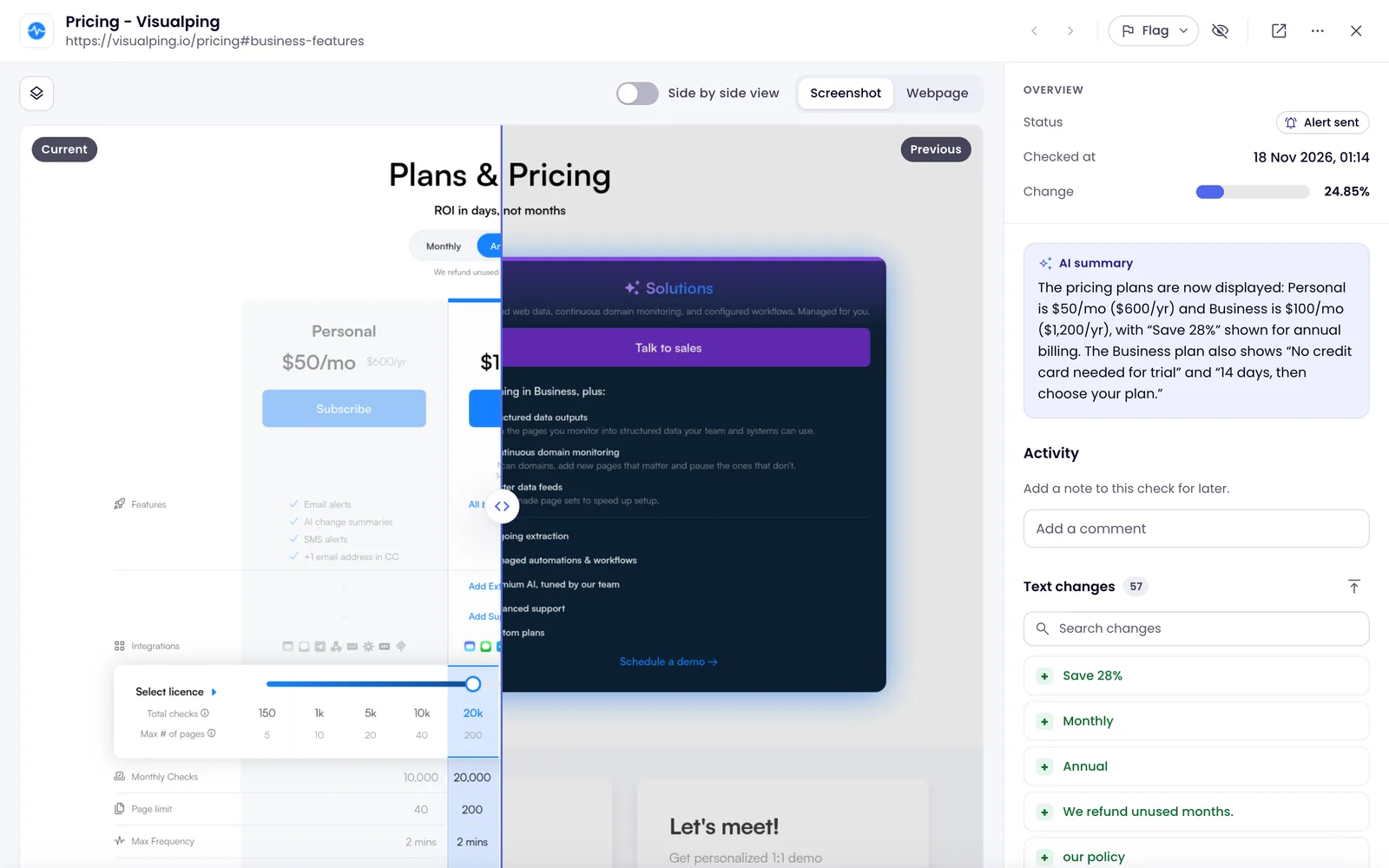
Open your first checks before you rely on them: UPS’s and FedEx’s pages answered a plain request from our network with an almost empty page, and we have no numbers yet from customers’ checks of them, so make sure the screenshot shows the percentage, not just the page. EIA’s page read normally. Monity reads EIA’s published diesel price; your contract may discount the surcharge, so it doesn’t tell you what you’ll be billed. More: the tariff tracker and vendor and supply chain monitoring. Start free on Monity.