


There is no single official tariff feed: a US tariff change is usually published in the Federal Register, written into the Harmonized Tariff Schedule by the US International Trade Commission, and put into practice by CBP in a CSMS message, often with a USTR announcement around it. The Federal Register and CBP send their own free email alerts, so start there. Monity (monity.ai) adds the pages that send none, and one alert filtered by the products and countries you import.
Where a tariff change shows up
| Source | What appears there | Its own alert |
|---|---|---|
| Federal Register | Presidential proclamations and executive orders, and agencies’ notices that change duties. They are on public inspection at least one business day before they publish, from about 8:45 a.m. Eastern; new documents are usually added at 11:15 a.m. and 4:15 p.m. | Email or RSS for any saved search (how) |
| CBP, CSMS | How to file a new duty: guidance messages with the new chapter 99 numbers, plus ACE notices | Email, after you register on CBP’s CSMS page; monthly archive files since 2011 |
| USITC, the HTS | The schedule itself, revised during the year, each revision with a Change Record of what changed | None we found: watch the revision list |
| USTR | Section 301 actions and trade announcements, among much else | Watch the press releases |
The schedule moves often. 2026 HTS Revision 23 was published on November 10, 2026, the sixth revision since September 2. And most of what these sources publish is not about your goods: of USTR’s ten newest press releases on November 23, 2026, three were about workers’ rights cases in Mexico.
Set up the free official alerts first
- CSMS: register for CBP’s CSMS emails. Every message comes, ACE outages included, so set a mail filter for “GUIDANCE” and your chapters.
- Federal Register: search for what affects you, such as “Harmonized Tariff Schedule” with an agency or a country, and subscribe to the search by email or RSS.
If that covers it, you don’t need anything else. A tracker earns its place when the official alerts send too much, miss the pages that matter to you, or reach one person’s inbox and not the team.
What a tariff tracker adds
- A filter in plain words. “Tell me when a new release mentions tariffs on steel or aluminum” or “only notices that name China or HTS heading 8541”: changes that don’t match are kept, but don’t alert you.
- The pages with no email. The HTS revision list, USTR’s press releases, and the page of a tariff action you follow, which can change without a new document.
- One channel for the team. Slack, Microsoft Teams, email or a webhook into your own system, and a Google Sheets row per alert as a running log.
- A record. Every check keeps the page before and after, with the date, for when someone asks what changed and when you knew.
Set it up in Monity
- Create a page monitor for each source page that allows it: the USTR press releases list, the HTS revision list and any CBP page you follow. For the Federal Register, subscribe to your search by email or RSS: FederalRegister.gov limits programmatic access to its developer APIs.
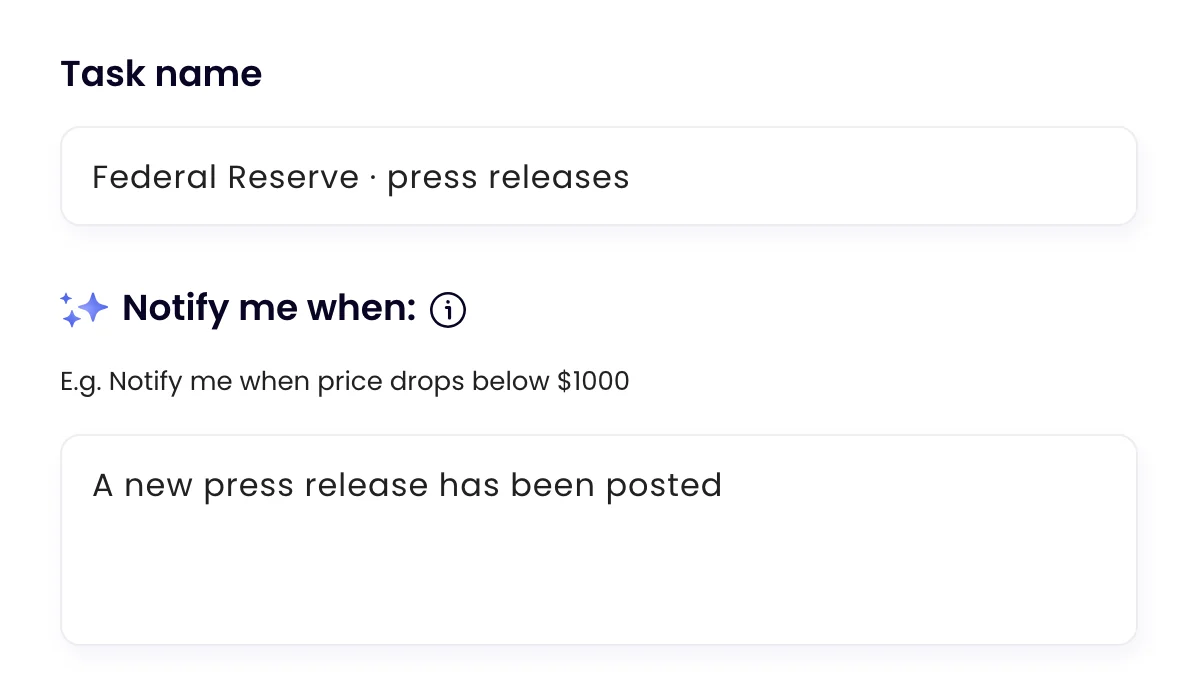
- Write the rule in a sentence, naming your products, headings or countries. Monity compares each check with the last one and alerts only when the change matches.
- Pick the channels and how often to check. Three pages checked every hour use about 2,200 credits a month, which fits Business Small: 5,000 credits, checks as often as every 15 minutes, three seats, $25 a month billed yearly. The free plan’s 100 credits a month cover one page checked twice a day.
- Open the first checks and make sure they show the list you see in your browser.
What Monity doesn’t do
- It doesn’t tell you your duty rate, classify goods or file anything: it tells you a source changed, and what changed on the page.
- It isn’t legal advice. Read the document itself, or ask your customs broker, before you act.
- cbp.gov turned away a plain request from our network, and we have no production numbers for it yet. Monity doesn’t get past a site’s bot protection: if the first checks of a CBP page don’t show the page, rely on CBP’s CSMS email for it.
More: tracking export control lists, watching government pages, regulatory compliance monitoring and vendor and supply chain monitoring. Start free on Monity, or try a Business plan for 7 days with no card.