
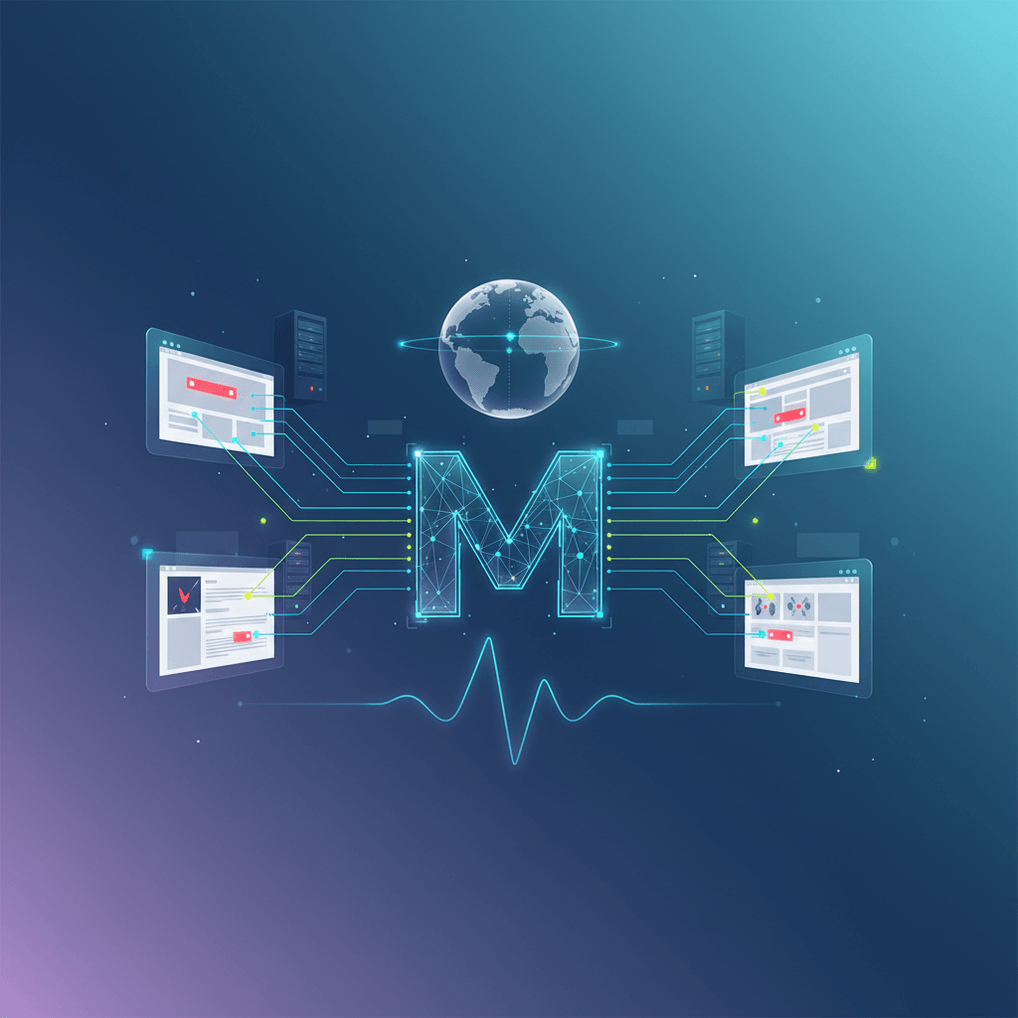
For large enterprises, a website is more than just a source of information - it is the primary interface for customer trust, investor relations, and brand identity. When a corporate site experiences a layout shift, a broken image, or a CSS failure, the damage goes beyond aesthetics. It signals negligence to shareholders and customers alike. This is why visual integrity monitoring for corporate websites has moved from a nice-to-have to a critical operational requirement.
Unlike standard uptime checks which merely ping a server to see if it responds, visual integrity monitoring looks at the site as a human would. It validates that the pixels are in the right place, the branding is consistent, and the user interface functions exactly as intended.
What is visual integrity monitoring?
Visual integrity monitoring involves automatically scanning web pages to detect visual deviations from an approved baseline. This technology captures screenshots of specific pages at set intervals and compares them against previous versions. If the visual difference exceeds a defined threshold, the system triggers an alert.
However, modern tools like monity.ai have evolved beyond simple pixel-peeping. By integrating AI, these tools can distinguish between a minor dynamic content update and a critical visual failure. This distinction is vital for corporate environments where false positives can cause alert fatigue among IT and marketing teams.
Why corporate websites face higher risks
Corporate web ecosystems are complex. They often involve multiple content management systems (CMS), third-party plugins, and decentralized content teams. This complexity invites several risks:
- CMS updates: A security patch in WordPress or Drupal might inadvertently break a custom theme, causing navigation bars to overlap with content.
- Third-party script failures: If an external marketing tag fails to load, it might leave a gaping white space or broken iframe on the homepage.
- responsive design breaks: A layout might look perfect on desktop but completely shatter on mobile devices due to a rogue CSS rule.
Implementing visual integrity monitoring for corporate websites acts as a safety net, catching these issues immediately after deployment or during routine checks.
The role of AI in visual monitoring
Traditional monitoring tools often struggle with dynamic content. If a news ticker updates, a pixel-based tool might flag it as an error. This is where monity.ai differentiates itself.
With monity.ai, the system doesn't just see pixels; it understands context. When a change is detected, the AI analyzes the visual difference and generates a concise summary, such as "The 'Investor Relations' button has moved 20px down and the footer color has changed to blue." This allows stakeholders to instantly understand the severity of the change without having to manually inspect the code.
Smart prompts for targeted alerts
Corporate teams can also leverage AI prompts to monitor for specific business logic rather than just visual layouts. For example, a compliance officer could set a prompt like "Alert me if the privacy policy link is removed from the footer" or "Notify me if the disclaimer text becomes unreadable."
Handling complex user flows
Corporate websites often feature gated content, partner portals, or complex forms. Static monitoring is insufficient here because the critical visual elements exist behind interactions.
Advanced monitoring solutions allow you to simulate browser actions before the check occurs. You can configure the monitor to accept cookies, close pop-ups, log in to a portal, or fill out a lead generation form. monity.ai handles these actions seamlessly, ensuring that the visual integrity is maintained across the entire user journey, not just the landing page.
Best practices for implementation
To establish a robust visual integrity strategy, consider the following steps:
- Prioritize high-traffic pages: Start by monitoring your homepage, pricing pages, and investor relations sections. These are high-visibility areas where errors are most costly.
- Define tolerance levels: Not every pixel change requires an emergency meeting. Set sensitivity thresholds to filter out minor rendering differences between browsers while catching glaring layout shifts.
- Integrate with workflow tools: Alerts should go where your team works. Connect your monitoring tool to Slack, Discord, or Microsoft Teams. With monity.ai, these notifications include AI-generated summaries, so the on-call engineer knows immediately if it's a false alarm or a critical incident.
Protect your digital presence today
In a corporate environment, manual testing cannot scale to meet the frequency of content updates and deployment cycles. Automated visual integrity monitoring for corporate websites is the only way to ensure brand consistency 24/7.
Whether you need to verify HTML structure, track visual layouts, or monitor specific text elements, modern tools provide the necessary flexibility. You can start protecting your brand assets right now. Try monity.ai for free and set up your first monitor in minutes. The platform offers a free tier forever, making it risk-free to audit your site's visual stability.
Monitor anything at anytime
Never miss anything that matters

Top Articles
71 Shelton Street, Covent Garden, London, WC2H9JQ United Kingdom
© Copyrights Monity.ai, 2025, Inc.